5 Aiven Alternatives: Managed PostgreSQL Without the Platform Handcuffs
 Solanica Team
Aiven is not broken, and leaving it is not automatically the smart move. Its free PostgreSQL tier includes 1 GB of storage, while the always-on Developer tier starts at $5/month with 1 CPU, 1 GB RAM and 8 GB storage.1 Standard service plans include VMs, networking and backups. So if someone sells you an Aiven migration on the basis of a hidden per-GB Aiven egress fee, ask them to check the date and the fine print: your application’s cloud provider can still charge for traffic, and BYOC billing works differently.2
The real reasons to shop around are less dramatic and more useful.
Your fleet is growing. Aiven bills services hourly and charges each service in a project separately. Extra storage and features such as PrivateLink can add cost; production plans add nodes for high availability.23 That is a reasonable price for managed infrastructure, but it means a PostgreSQL-plus-Kafka-plus-search architecture is several managed services, not one flat database bill.
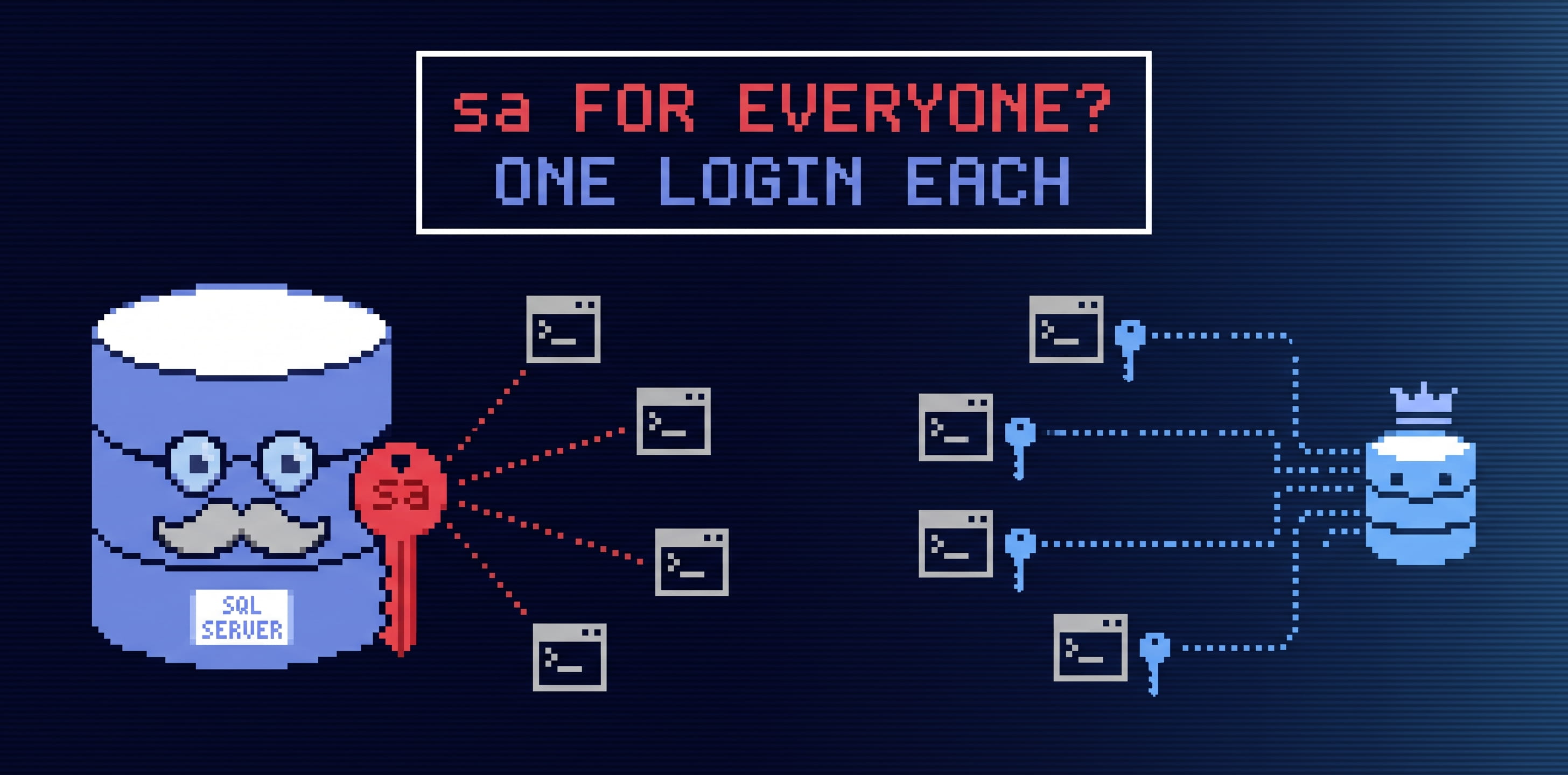
You need a different operating model. Aiven normally runs your database on Aiven-managed infrastructure. BYOC can put service VMs in your AWS, Google Cloud or Azure account, but it requires a commitment deal and Advanced or Premium support. Aiven continues to manage the nodes, and you receive separate Aiven and cloud-provider invoices.4 That is not the same as running PostgreSQL in your own Kubernetes cluster.
You need a different kind of Postgres. Serverless scale-to-zero, an application backend bundled around the database, deep AWS integration, or an on-premises deployment all point toward different alternatives. Public reviews are similarly mixed: users praise ease of use and support, while individual reviewers complain about pricing, storage costs or support experiences. Treat those as anecdotes, not market-size data.5
Here are five credible options, including where each one is a worse choice than Aiven.
| Alternative | Entry price (checked Nov 24, 2026) | Best for | The catch |
|---|---|---|---|
| Crunchy Bridge | $9/mo (Hobby-0) | Focused managed Postgres, multi-cloud | Part of Snowflake since 2025; narrow catalog |
| Neon | ≈ $15/mo (Launch, intermittent workload) | Scale-to-zero, branching, many small databases | Bill has many moving parts; sustained load is a different story |
| Supabase | $25/mo (Pro) | Application backend + Postgres in one project | Small base instance; PITR is a $100/mo add-on |
| Amazon RDS | ≈ $12/mo (db.t4g.micro, us-east-1, before storage) | Teams already living in AWS | AWS-only gravity; billing beyond the instance line |
| Solanica + OpenEverest | Free core (OpenEverest, Apache 2.0); Solanica support at custom pricing | Your own Kubernetes, on-prem, data sovereignty | You own the platform — Kubernetes skills required |
Monthly equivalents are illustrative, not quotes; the sections below and the source notes carry the fine print.
1. Crunchy Bridge: for Postgres without the side quests
Crunchy Bridge is a PostgreSQL-only managed service from Crunchy Data. It deploys on AWS, Azure or Google Cloud and includes infrastructure, backups and data transfer in its prices. The current table lists Hobby-0 at $9/month for 2 cores and 0.5 GB RAM, although the headline on the same page says plans start at $10/month. Storage is $0.10/GB-month.6 We are noting the discrepancy rather than pretending the pricing page is tidier than it is.
The good: this is the focused option. Crunchy Bridge offers single-tenant instances, private networking, point-in-time recovery, read replicas, automated failover, monitoring and a Postgres-focused support team. You can manage it through a dashboard, API or CLI. Backups and connection pooling are included, and Crunchy says there are no additional ingress or egress charges.7 If Aiven’s broad catalog feels unnecessary, Crunchy’s narrower scope is a feature.
The bad: focused also means narrow. You do not get Aiven’s Kafka, Flink or OpenSearch catalog, nor Supabase’s application services. The cheap Hobby tier is tiny, and a production-sized instance can cost much more. Crunchy Bridge is still a third-party managed cloud service, not PostgreSQL on your own Kubernetes or bare metal. And since June 2025, Crunchy Data has been part of Snowflake — reportedly a ~$250M deal. Nothing suggests neglect: Bridge is actively sold and its changelog shows continued releases. But it is no longer an independent vendor, and Bridge’s long-term roadmap is now tied to Snowflake’s platform strategy.89
Pick it when: PostgreSQL is the main event, you want multi-cloud managed hosting, and you would rather pay a Postgres specialist than assemble a broader data platform.
2. Neon: for spiky workloads and database-per-tenant designs
Neon takes a serverless approach: compute autoscales, can scale to zero when idle, and is billed separately from storage. Its free plan includes 100 CU-hours and 1 GB of storage per project. Launch has no monthly minimum; compute costs $0.106/CU-hour and storage $0.35/GB-month. Instant restore, extra branches, snapshots and network transfer have their own allowances or rates. Neon’s own example for an intermittent Launch workload is about $15/month.10
The good: idle databases stop accruing compute charges. Branching, autoscaling, read replicas and connection pooling are included across plans, and paid plans allow 100 or more projects. That makes Neon especially interesting for preview environments, agents and database-per-tenant systems where provisioning fixed VMs would leave a lot of idle capacity.10
The bad: the bill has more moving parts than a flat VM price. Launch includes 500 GB of public network transfer per project, then charges $0.10/GB; instant restore is another $0.20/GB-month. Private networking and an uptime SLA require Scale, while Launch support is billing support.10 “Cheap when idle” does not guarantee “cheap at sustained production load.” Model your actual CU-hours before moving.
Pick it when: traffic is variable, environments come and go, or you need many isolated Postgres databases without paying for an always-on VM for each one.
3. Supabase: for teams building an application, not just a database
Supabase is managed PostgreSQL with Auth, Storage, Realtime and Edge Functions attached. You can ignore those extras and connect with psql, Prisma, Drizzle or another Postgres client; Supabase says unused products cost nothing. The free tier includes a 500 MB database but pauses projects after a week of inactivity. Pro starts at $25/month, including 8 GB disk, 250 GB egress and a $10 compute credit that covers one shared-compute Micro project with 1 GB RAM.11
The good: you get a dedicated Postgres database and a useful application backend in one project. Auth, file storage, APIs and realtime subscriptions are already wired together, which can remove a lot of application plumbing. Paid projects do not pause for inactivity, and Pro includes daily backups retained for seven days.11
The bad: $25 does not buy a large production database. The included Micro instance has shared compute and 1 GB RAM; larger instances cost more. Additional projects add their own compute charges. Point-in-time recovery is a $100/month add-on per seven days of retention, and Pro egress above 250 GB costs $0.09/GB.11 If all you want is PostgreSQL, the bundled backend may be unnecessary surface area.
Pick it when: you are shipping an application and want Postgres plus auth, storage and realtime without integrating four separate services yourself.
4. Amazon RDS for PostgreSQL: for AWS shops that want the native option
RDS for PostgreSQL is Amazon’s managed relational database service. Its price depends on region, instance class, deployment and storage. As a concrete entry example, the official US East (N. Virginia) price list published on November 20, 2026 rates a Single-AZ db.t4g.micro at $0.016/hour—about $11.68 for 730 hours, before storage, backup storage and data transfer. The instance has 2 vCPUs and 1 GiB memory.1213
The good: RDS is the path of least resistance when the rest of your stack is on AWS. It offers automated backups with point-in-time recovery for a retention period of up to 35 days, Multi-AZ deployments, read replicas, blue/green deployments, VPC isolation, KMS encryption and SSL.14 Your existing AWS networking, security and procurement processes apply.
The bad: “AWS-native” is another way of saying “not cloud-agnostic.” Compute is only the first billing line: storage, provisioned IOPS, backup storage and data transfer can all contribute.12 Version discipline matters too. RDS automatically enrolls supported older PostgreSQL versions in Extended Support after standard support ends, and Extended Support adds a per-vCPU charge.1215
Pick it when: your applications and platform team already live in AWS, and moving to another managed-service control plane would add more complexity than it removes.
5. Solanica + OpenEverest: for running Postgres on your own Kubernetes
Solanica takes a different approach: instead of renting you a database endpoint on vendor-managed VMs, it helps you run databases on infrastructure you control. OpenEverest is the free, Apache 2.0 open-source core. It provisions and manages PostgreSQL and other data workloads on Kubernetes in the cloud or on-premises. Solanica’s commercial Business Critical plan adds enterprise support and features at custom pricing.1617
The good: your PostgreSQL pods and data volumes stay inside your Kubernetes environment. OpenEverest provides a self-service UI, automated backups and PITR, while supporting multi-cloud, hybrid and on-premises deployments.1617 There is no separate Solanica per-GB database-egress tariff; you pay your own infrastructure and network provider. Keeping applications and databases in the same cluster or VPC can also avoid cross-cloud traffic. For sovereignty, air-gap or data-gravity requirements, that operating model matters more than a slightly cheaper instance line.18
The bad: this is not magic zero-ops Postgres. Your team needs Kubernetes skills and owns the underlying compute, storage, networking and their costs. If you do not already run Kubernetes, adopting it just to replace a $5 Aiven database would be a special kind of self-sabotage. Aiven also remains the broader one-vendor choice for managed Kafka, Flink and OpenSearch alongside PostgreSQL.18
Pick it when: you already have a Kubernetes platform team, need on-premises or tightly controlled infrastructure, or want an open-source control plane rather than another proprietary managed-service layer. Start with OpenEverest for free; consider Solanica when you need the commercial support layer. To compare the deployment and operating models in more detail, see our detailed head-to-head with Aiven.
Which Aiven alternative should you pick?
- Pick Crunchy Bridge for focused, multi-cloud managed PostgreSQL and Postgres-specialist support.
- Pick Neon for scale-to-zero, branching and lots of intermittent or tenant databases.
- Pick Supabase when the application backend around Postgres is as valuable as the database itself.
- Pick Amazon RDS when AWS is already your operating center of gravity.
- Pick Solanica + OpenEverest when Kubernetes, infrastructure control and data location are non-negotiable.
And stay with Aiven if its multi-service catalog, low-entry tiers and hands-off operations fit your team. Aiven’s standard plans include networking, and the Developer tier is inexpensive.12 The wrong migration is the one you make because a listicle needed a villain.
The useful question is not “which Aiven alternative is cheapest on a pricing screenshot?” It is “which operating model do we want when this database is ten times bigger, three auditors deeper and actually mission-critical?”
Sources and pricing notes
All prices and product details below were checked on November 24, 2026. Prices exclude taxes unless a provider says otherwise. Monthly equivalents are illustrative, not quotes.
Aiven, “However you Postgres, we’ve got you covered” and Developer Tier: free-tier resources; $5/month Developer tier with 1 CPU, 1 GB RAM and 8 GB storage. ↩︎ ↩︎
Aiven Documentation, Service pricing: hourly billing; separate charges for services in a project; all-inclusive plan components; additional storage and PrivateLink charges; application-provider network charges; trial-credit mechanics. ↩︎ ↩︎ ↩︎
Aiven, PostgreSQL plans and pricing: Startup, Business and Premium node configurations, storage ranges, additional-storage availability and support-tier notes. ↩︎
Aiven Documentation, Bring your own cloud (BYOC): eligible clouds, commitment and support-tier requirements, Aiven-managed nodes, architecture, custom pricing and separate invoices. ↩︎
G2’s Aiven for PostgreSQL reviews and Capterra’s Aiven for PostgreSQL listing: mixed user comments on usability, support and cost. Review pages may require JavaScript; individual comments are not statistically representative. ↩︎
Crunchy Data, Crunchy Bridge pricing: headline “from $10/mo”; Hobby-0 table price of $9, 2 cores and 0.5 GB RAM; $0.10/GB-month storage; included infrastructure, backups and data transfer. ↩︎
Crunchy Data, Crunchy Bridge product page: deployment and management model, HA, PITR, support, private networking, backups, pooling and network-charge statements. ↩︎
Snowflake, “Snowflake Acquires Crunchy Data to Bring Enterprise Ready Postgres Offering to the AI Data Cloud”, June 2, 2025; CNBC reported the price at about $250 million. ↩︎
Crunchy Bridge changelog: continued product releases through 2026, including the new Crunchy Data Warehouse; no sunset, rename or migration has been announced. ↩︎
Neon, Pricing, page updated November 4, 2026: plan limits, CU-hour and storage rates, scale-to-zero, branching, project limits, support, networking, restore and egress rates, and worked monthly-cost examples. ↩︎ ↩︎ ↩︎
Supabase, Pricing: database-only usage, Free and Pro limits, compute credits and instance sizes, backups, additional-project charges, PITR and egress rates. ↩︎ ↩︎ ↩︎
AWS, Amazon RDS for PostgreSQL pricing: instance, storage, IOPS, backup and transfer components; billing rules; Extended Support charges. ↩︎ ↩︎ ↩︎
AWS Price List, AmazonRDS US East (N. Virginia) current offer index, publication timestamp November 20, 2026: Single-AZ PostgreSQL db.t4g.micro SKU
9HPEGXQTDDGH53C9,$0.016per instance-hour, 2 vCPUs and 1 GiB.$0.016 × 730 = $11.68. ↩︎AWS, Amazon RDS for PostgreSQL product page: backup/PITR, Multi-AZ, read replicas, blue/green deployments, storage, VPC, KMS and SSL features. ↩︎
AWS Documentation, Available PostgreSQL database versions: automatic enrollment in RDS Extended Support after the end of standard support. ↩︎
Solanica, Plans & Pricing: free OpenEverest Community tier, custom Business Critical pricing, PostgreSQL support, Kubernetes environments, backups/PITR and enterprise support. ↩︎ ↩︎
OpenEverest, project website: Apache 2.0 licensing, Kubernetes and on-premises deployment, supported technologies and management capabilities. ↩︎ ↩︎
Solanica, Aiven alternatives: Solanica vs Aiven: infrastructure and data location, Kubernetes operating model, networking considerations, technology-catalog differences and required Kubernetes skills. This is Solanica’s own comparison and is used for Solanica positioning, not as an independent verdict on Aiven. ↩︎ ↩︎

 Sergey Pronin