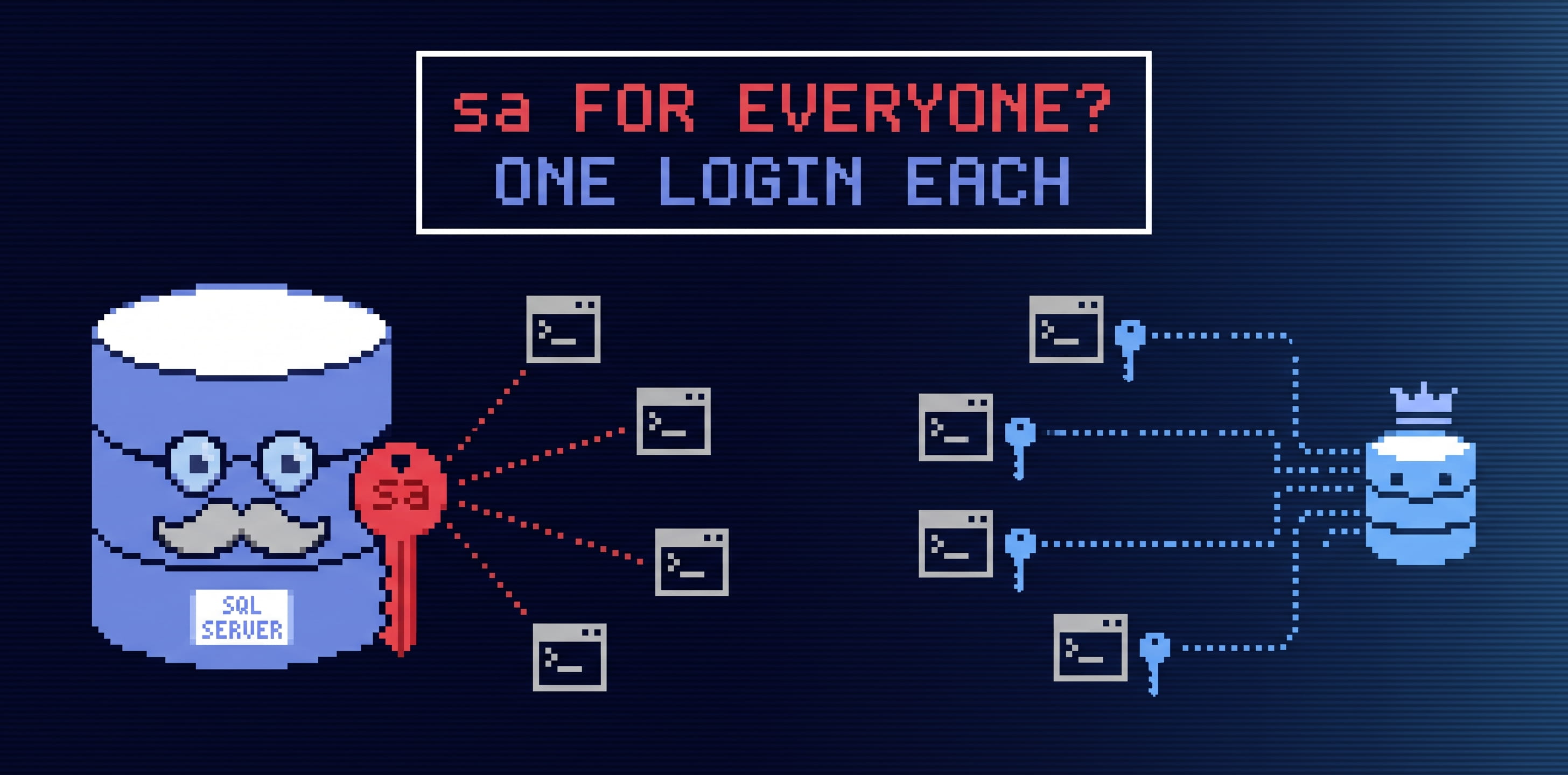
5 Altinity.Cloud Alternatives After the EDB Acquisition (and When to Stay)
 Solanica Team
On November 5, 2026, EDB announced that it had acquired Altinity. EDB describes the deal as bringing “the two leading open source databases” together in EDB Postgres AI, its “sovereign AI data system”. Altinity becomes the EDB Real-Time Analytics group. Financial terms were not disclosed.123
If you run ClickHouse on Altinity.Cloud, the first thing to know is that nothing has changed yet. Altinity’s CEO wrote that “customer contracts remain the same, the SLAs are the same, the products and services are the same,” and the management team stays in place. EDB’s announcement page commits to keeping ClickHouse, Altinity Stable Builds and the Altinity Kubernetes Operator under Apache 2.0, and says Altinity.Cloud customers keep their service, SLAs and deployments.24 Those are vendor commitments, not contract terms, but they are public and specific.
So why read a list of alternatives at all? Three honest reasons:
Your vendor’s strategy just changed owners. EDB itself called Altinity “a leading independent provider” of ClickHouse software and services.1 Its roadmap now sits inside a Postgres-centric platform whose stated plan is a shared Apache Iceberg catalog and consistent access controls across Postgres and ClickHouse. If you want that, great. If ClickHouse is your whole world and Postgres isn’t, that’s a direction worth watching.
Change of control triggers vendor reviews. Many procurement and security teams re-assess a supplier after an acquisition, whatever the press release says. “What is our plan B?” is a reasonable question to have an answer to.
Pricing has not been addressed. We found no statement about Altinity.Cloud pricing after the acquisition. Today, BYOC and bring-your-own-Kubernetes deployments are billed per vCPU at $45, $60 or $80 per vCPU per month for the Dev, Enterprise and Premium tiers, with storage free and your cloud bill paid separately.5 That is transparent and competitive. It may also be revisited, as roadmaps and price lists often are after a deal.
Here are five credible options, including where each one is worse than staying put. (You’ll also find DoubleCloud on older lists. It wound down operations in 2024 and stopped accepting new accounts on October 1 of that year.6)
| Alternative | Entry price | Best for | The catch |
|---|---|---|---|
| ClickHouse CloudUpstream SaaS + BYOC | Usage-basedBasic from $0.21811 per compute unit-hour (AWS us-east-1) | Upstream features such as SharedMergeTree, serverless-style operations | BYOC needs a committed contract and a ClickHouse-managed Kubernetes cluster |
| NetApp InstaclustrManaged open source | On requestVia pricing calculator | Multi-technology managed open source with an SLA | ClickHouse pricing not published; part of a large vendor portfolio |
| Aiven for ClickHouseManaged multi-service | $43/moDeveloper plan | Teams already on Aiven for Kafka or Postgres | Entry plan is a single shared node; BYOC is a commitment deal |
| TinybirdAnalytics API platform | Free tierPaid plans from $25–49/mo | Real-time analytics APIs for product teams | A platform on top of ClickHouse, not a drop-in cluster |
| Self-managed on KubernetesOpen source operators | FreeApache 2.0, plus your infrastructure | Platform teams that want full control | You own day-2 operations |
Prices checked November 24, 2026. Monthly figures are illustrative, not quotes; the source notes carry the fine print.
1. ClickHouse Cloud: for upstream features from the company behind ClickHouse
ClickHouse Cloud is run by ClickHouse, Inc., the company that leads ClickHouse development. It is usage-based, with a $300 trial credit and no monthly minimum. A compute unit is 8 GiB RAM and 2 vCPUs; on AWS us-east-1, the Basic tier lists $0.21811 per compute unit-hour and $25.30 per TB-month of storage, with Scale and Enterprise tiers priced higher.7
The good: you get the same binary and features as the ClickHouse Cloud service, including SharedMergeTree and compute-compute separation, from the team that writes the engine.78 BYOC is generally available on AWS, Google Cloud and Azure: the data plane, including your clusters, data and backups, runs in your cloud account, while the control plane stays in ClickHouse’s VPC.8
The bad: the SaaS tier bills internet egress, so data-heavy exports add up.7 BYOC “is designed specifically for large-scale deployments, and requires customers to sign a committed contract.” It runs on an EKS, GKE or AKS cluster that ClickHouse creates and operates; installing into your existing Kubernetes cluster is not supported. It needs three availability zones, and SQL Console, ClickPipes and customer-managed encryption keys are not yet available in BYOC.8 If you came to Altinity.Cloud because it ran on your Kubernetes, ClickHouse’s BYOC is a different model.
Pick it when: you want the upstream vendor and its cloud-only features, and you’re comfortable with either SaaS or a committed BYOC contract.
2. NetApp Instaclustr for ClickHouse: for managed open source with an SLA
Instaclustr, part of NetApp, offers managed open-source ClickHouse alongside Kafka, Cassandra, PostgreSQL and other technologies. It reached general availability on ClickHouse 26.8 LTS on November 11, 2026, and advertises an availability SLA of up to 99.99%, 24/7 support and provisioning through a console, API or Terraform.910
The good: like Altinity, Instaclustr runs plain open-source ClickHouse rather than a proprietary fork, so there’s no new storage engine to migrate into. If you also run Kafka or Cassandra, one vendor and one support contract can cover the pipeline.
The bad: ClickHouse prices are not published; you’ll need the calculator or a sales conversation.9 And if your concern is “my independent ClickHouse vendor is now part of a much larger company,” Instaclustr has been part of NetApp since 2022. Ask the same continuity questions you would ask EDB.
Pick it when: you want a managed, open-source ClickHouse with a contractual SLA, ideally alongside other open-source data services you already run.
3. Aiven for ClickHouse: for teams already on Aiven
Aiven for ClickHouse is part of Aiven’s broader managed data catalog. The entry Developer plan is $43/month for a single shared node with 2 shared vCPUs, 4 GB RAM and 25 GB of storage. Higher plans are sized through Aiven’s calculator.11 The service is actively maintained: Aiven’s version lifecycle lists ClickHouse 26.3 as supported until September 2027.12
The good: if Kafka, PostgreSQL or OpenSearch already live on Aiven, adding ClickHouse means one console, one bill and built-in integrations between services. The pricing model is all-inclusive and predictable.
The bad: the cheap entry plan is for development, not production analytics. Aiven’s BYOC model puts Aiven-managed nodes in your AWS, Google Cloud or Azure account, but requires a commitment deal and Advanced or Premium support.13 Confirm with Aiven whether ClickHouse is available in BYOC for your region before planning around it. (For a broader look at Aiven, see our Aiven alternatives roundup.)
Pick it when: you’re already an Aiven customer, or you want ClickHouse as one of several managed services from a single provider.
4. Tinybird: for product teams shipping real-time analytics APIs
Tinybird is a developer platform built on ClickHouse: you ingest data, write SQL, and publish the results as API endpoints. It has a free tier, and paid plans start in the $25–49/month range. On the day we checked, Tinybird’s pricing pages showed both figures for the Developer plan. Enterprise customers get a dedicated, isolated ClickHouse cluster.14
The good: if your ClickHouse cluster exists mainly to power user-facing dashboards and APIs, Tinybird removes a lot of the plumbing between the database and your application. SOC 2 Type II and HIPAA compliance are listed across plans.14
The bad: this is not a lift-and-shift target. Moving from Altinity.Cloud means re-modelling your tables and queries into Tinybird’s data sources and endpoints, and giving up direct cluster-level control. Tinybird announced a self-managed deployment option in beta in 2025; we could not confirm its current status.15
Pick it when: your analytics workload is an application feature, and you’d rather ship endpoints than operate a cluster.
5. Self-managed ClickHouse on Kubernetes: for platform teams that want the keys
Altinity.Cloud already runs ClickHouse on Kubernetes with the open-source Altinity Kubernetes Operator underneath.16 Altinity says that if you disconnect a bring-your-own-cloud environment, “your ClickHouse cluster continues to run as always”; you just lose the Altinity Cloud Manager.17 For teams on BYOC or bring-your-own-Kubernetes, that makes self-management the lowest-friction exit, because the operator and the data stay where they are.
You have three building blocks:
- The Altinity Kubernetes Operator for ClickHouse. It is Apache 2.0, battle-tested, and has more than 108 million Docker Hub pulls. EDB has committed to keeping it open source.1418
- The official ClickHouse operator. ClickHouse, Inc. released its own Apache 2.0 operator in May 2026, with sharding, replication, ClickHouse Keeper and TLS. Its API is still
v1alpha1.19 - OpenEverest, with Solanica for support. (Disclosure: Solanica builds OpenEverest, so weigh this entry accordingly.) OpenEverest is an Apache 2.0, CNCF Sandbox control plane that wraps operators behind one UI and API, alongside PostgreSQL, MySQL, MongoDB and other engines. For ClickHouse it drives the same battle-tested Altinity operator, and covers provisioning, replication with ClickHouse Keeper, sharding, scaling, upgrades and TLS. Managed backups and restore are next on the roadmap.20 You can bring your own Kubernetes, or have Solanica deploy and manage a cluster in your cloud account. We’re running an early-access program for ClickHouse on your own cloud for teams who want to shape it, and a detailed comparison with Altinity.Cloud if you want the side-by-side.
The good: no per-vCPU management fee, no vendor control plane, and the same operator many Altinity.Cloud clusters already run. Your cluster also keeps running regardless of anyone’s acquisition strategy.
The bad: you become the managed service. Backups (for example with clickhouse-backup), upgrades, Keeper health, monitoring and 3 a.m. pages are your team’s job. That isn’t free either: a single on-call ClickHouse engineer costs more than a lot of vCPUs of management fees. If you don’t already run Kubernetes in production, don’t start just for ClickHouse: pick a managed option, or a partner who runs the cluster for you.
Pick it when: you have a Kubernetes platform team, data-sovereignty or air-gap requirements, or a fleet large enough that per-vCPU management fees outweigh the cost of operating it yourself.
When to stay with Altinity.Cloud
Staying is a perfectly reasonable answer, and for many teams it is the right one:
- The team you depend on hasn’t changed. The same engineers, the same management and, by EDB’s commitment, the same SLAs.24
- You may want what EDB is building. If you already run Postgres and want one vendor and one governance model across transactional and analytical data, the combined roadmap is aimed at you.1
- It’s already open. Altinity.Cloud runs open-source ClickHouse on an open-source operator, supports your own cloud and your own Kubernetes, and you can disconnect at any time.517 That is a better exit story than most managed services offer.
The sensible move for most Altinity.Cloud customers is not a migration. It’s a written plan B, a check of contract renewal dates, and a direct question to your account team about pricing and roadmap over the next twelve months.
Which Altinity.Cloud alternative should you pick?
- Pick ClickHouse Cloud for upstream-only features and a vendor-run service, if a committed BYOC contract or SaaS works for you.
- Pick Instaclustr for managed open-source ClickHouse with an SLA, alongside Kafka or Cassandra.
- Pick Aiven if you’re already on Aiven and want ClickHouse in the same console.
- Pick Tinybird if analytics is a product feature and you want APIs, not a cluster.
- Pick self-managed on Kubernetes, with the Altinity or official operator, or with OpenEverest and Solanica, if you want full control and have the platform team to back it.
The useful question isn’t “who bought whom?” It’s “who do we want to depend on for analytics in three years, and how hard is it to change our mind?”
Sources and pricing notes
All prices and product details below were checked on November 24, 2026. Prices exclude taxes. Monthly figures are illustrative, not quotes.
EDB, “EDB Acquires Altinity to Bring Together the Two Leading Open Source Databases…”, press release, November 5, 2026: deal announcement, “a leading independent provider”, EDB Postgres AI positioning, shared Iceberg catalog and access-control roadmap, 108 million+ Docker Hub pulls for the Altinity operator. ↩︎ ↩︎ ↩︎ ↩︎
Altinity, “Altinity and EnterpriseDB”, Robert Hodges, November 5, 2026: Altinity becomes the EDB Real-Time Analytics group; contracts, SLAs, products and management team unchanged. ↩︎ ↩︎ ↩︎
TechTarget, “EnterpriseDB acquires Altinity to unify open source database engines”, November 5, 2026: financial terms not disclosed; analyst commentary. ↩︎
EDB, Altinity announcement page: “Our commitments”, including Apache 2.0 for ClickHouse, Altinity Stable Builds and the Altinity Kubernetes Operator, and continuity of Altinity.Cloud service, SLAs and deployments. ↩︎ ↩︎ ↩︎
Altinity, ClickHouse pricing: bring-your-own-cloud per-vCPU rates of $0.0625, $0.0833 and $0.1111 per hour ($45, $60 and $80 per month at 720 hours) for Dev, Enterprise and Premium; free storage; supported environments include AWS, GCP, Azure, Hetzner, Nirvana and Kubernetes. Altinity-hosted SaaS rates load dynamically and are not quoted here. ↩︎ ↩︎
DoubleCloud, “DoubleCloud final update”, October 1, 2024: operations winding down; no new accounts. ↩︎
ClickHouse, Pricing: usage-based billing, $300 trial credit, compute-unit definition, Basic/Scale/Enterprise rates for AWS us-east-1, storage and egress rates. ↩︎ ↩︎ ↩︎
ClickHouse Docs, BYOC overview: GA on AWS, GCP and Azure; committed-contract requirement; ClickHouse-managed Kubernetes cluster; existing clusters not supported; three availability zones; SharedMergeTree support; planned features not yet available in BYOC. ↩︎ ↩︎ ↩︎
NetApp Instaclustr, Managed ClickHouse: open-source ClickHouse, up to 99.99% availability SLA, 24/7 support, console, API and Terraform provisioning. ↩︎ ↩︎
NetApp Instaclustr, “Instaclustr for ClickHouse 26.8 LTS is now generally available”, November 11, 2026. ↩︎
Aiven, ClickHouse pricing: Developer plan at $43/month with one shared node, 2 shared vCPUs, 4 GB RAM and 25 GB storage. ↩︎
Aiven Docs, Aiven for ClickHouse version lifecycle, updated September 9, 2026: supported versions and end-of-life dates. ↩︎
Aiven Docs, Bring your own cloud (BYOC): eligible clouds, commitment and support-tier requirements, separate invoices. ↩︎
Tinybird, Pricing and plans documentation: free tier, Developer plan shown at both $25 and $49 per month, dedicated Enterprise clusters, listed compliance certifications. ↩︎ ↩︎
Tinybird, self-managed deployment announcement, March 2025 (beta at announcement; current status not confirmed). ↩︎
Altinity Docs, Altinity.Cloud 101: the analytic stack runs on open-source software, including the Altinity Kubernetes Operator for ClickHouse. ↩︎
Altinity, Bring Your Own Cloud: shared-responsibility split; disconnecting leaves the ClickHouse cluster running without the Altinity Cloud Manager. ↩︎ ↩︎
GitHub, Altinity/clickhouse-operator: Apache 2.0 license and releases. ↩︎
ClickHouse, “Introducing the Official ClickHouse Kubernetes Operator”, May 6, 2026, and ClickHouse/clickhouse-operator: Apache 2.0,
v1alpha1API, sharding, replication, Keeper and TLS. ↩︎GitHub, openeverest/provider-altinity-clickhouse: capabilities table, Altinity operator bundled, backups and restore planned; OpenEverest for ClickHouse. ↩︎
 Sergey Pronin